
The Jazz Archives
This Archive of jazz videos based on the articles of Wim Demmenie is in the process of being transferred from the “Classic Jazz Lovers” Facebook group. Please bear with us as we complete this transition.
Categories
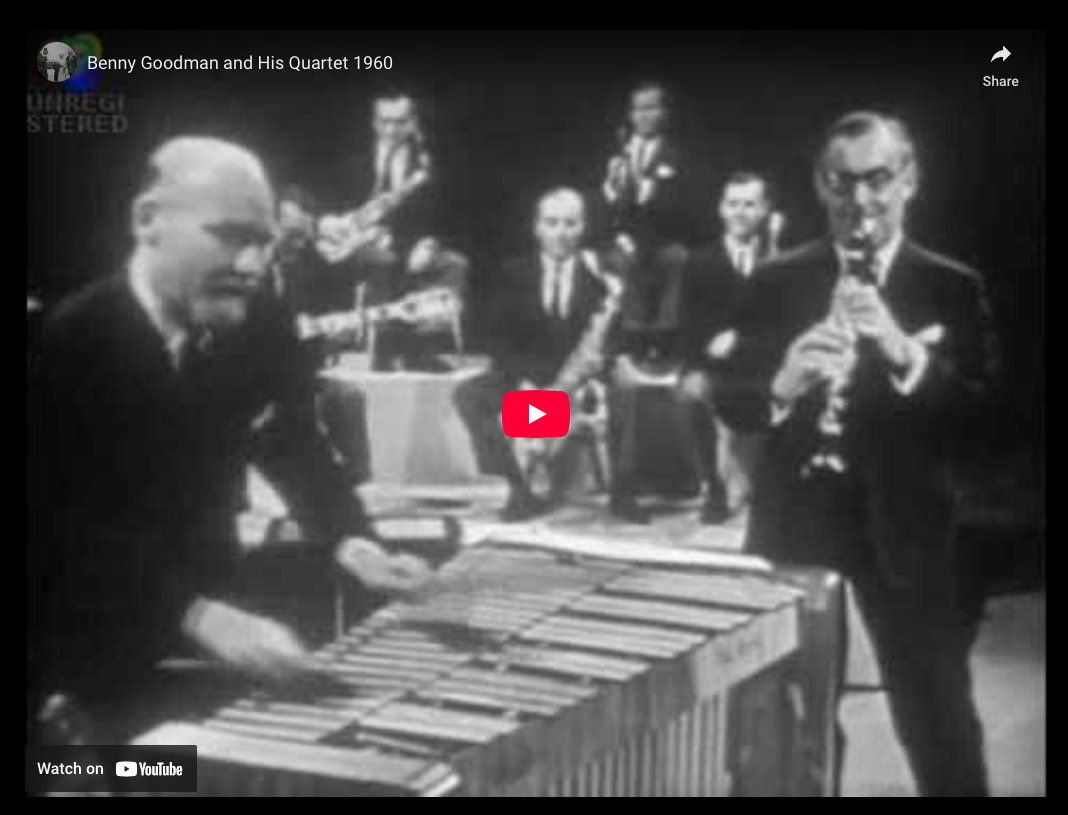
Benny Goodman—”The World Is Waiting For The Sunrise” (1960)
“The World Is Waiting For The Sunrise” was composed by Canadian concert pianist Ernest Seitz (1892-1978), who, according to Wikipedia, had “conceived the refrain when he was 12. Embarrassed about writing popular music, Seitz used the pseudonym “Raymond Roberts” when the song was first published in 1919.” It has been recorded by many singers and musicians since. When Les Paul and Mary Ford waxed their version in 1951 and the song, which has lyrics by Canadian character actor Gene Lockhart (1891-1957), became a million-seller. The Beatles made a home tape recording of the song around May 1960 and a month later Benny Goodman and Red Norvo played it on national television.
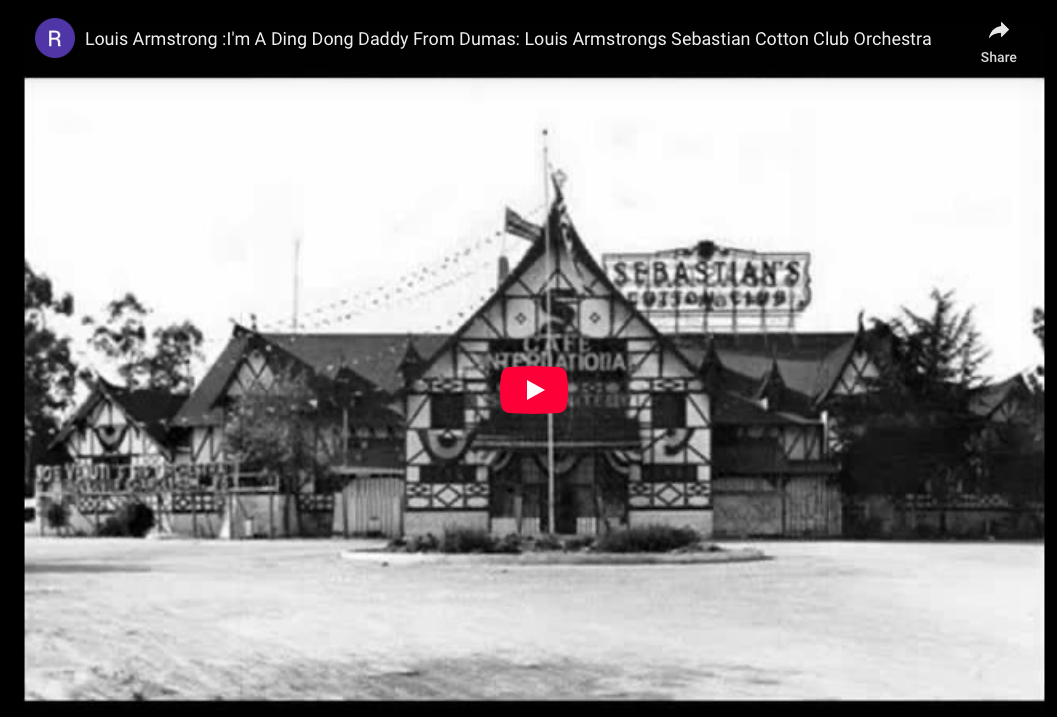
Louis Armstrong—”A Ding Dong Daddy From Dumas” (1930)
In the early-summer of 1930, 29-year old Louis Armstrong (1901-1971), who was still largely unknown to the general public, made a transcontinental train journey to the west coast for an engagement with a small orchestra in the Hollywood club of Frank Sebastian on Washington boulevard at Culver City. The band, led for the first few weeks after Armstrong’s arrival by trumpet-player Vernon Elkins, had the name of the club, located in the building formerly known as the Green Mill: Sebastian’s Cotton Club Orchestra. Among it’s members were two exceptional young jazz players: 21-year old drummer Lionel Hampton and the 22-year old trombonist Lawrence Brown, who subsequently would join the band of Duke Ellington. On Monday July 21, 1930, they made this record for Okeh in Los Angeles.
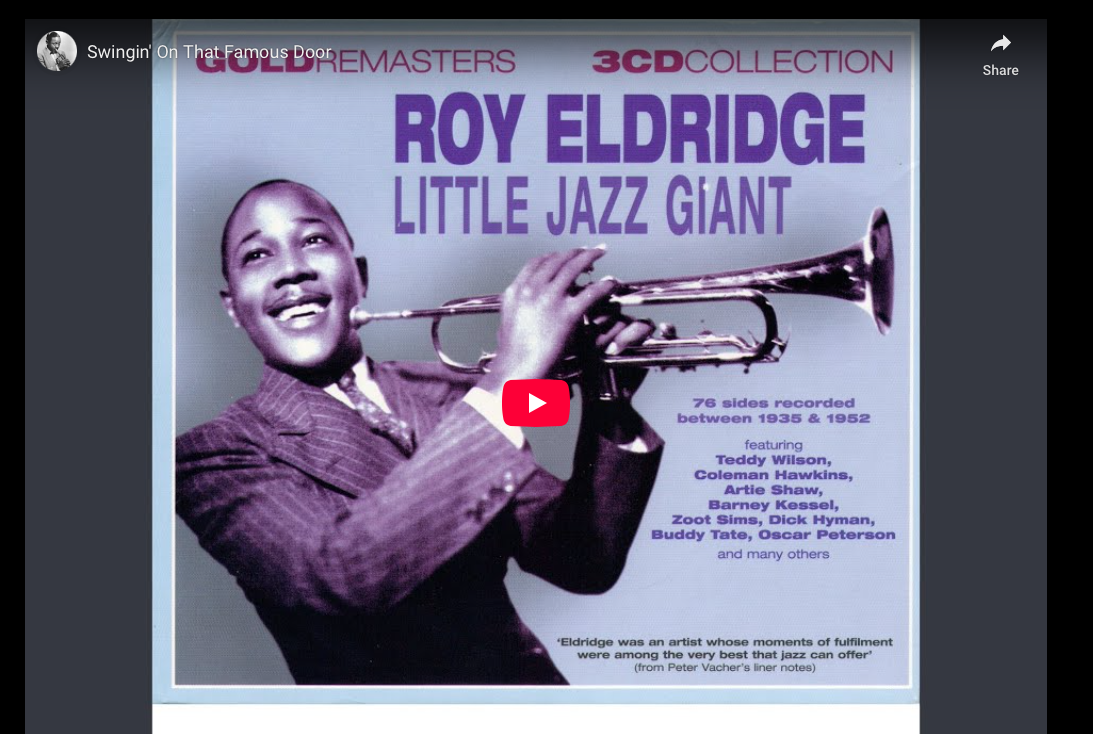
Roy Eldridge & The Delta Four—”Swingin’ On That Famous Door” (1935)
On Friday, December 20, 1935, a quartet calling themselves The Delta Four, stepped into the recording studio in New York. The four musicians were Pittsburgh-born David Roy Eldridge (1911-1989) playing the trumpet; Chicagoan Joseph Francis “Joe” Marsala (1907-1978), an American jazz clarinetist and songwriter who had hired Eldridge to replace trumpeter Wingy Manone in the quartet; jazz guitarist Carmen Mastren (Carmine Niccolo Mastandrea from Cohoes, 1913-1981) who was teamed up with Marsala at the time; and New Yorker Sid Weiss (1914-1994), a double-bassist who worked with the prominent big bands. They played “Farewell Blues” and “Swinging On The Famous Door.”
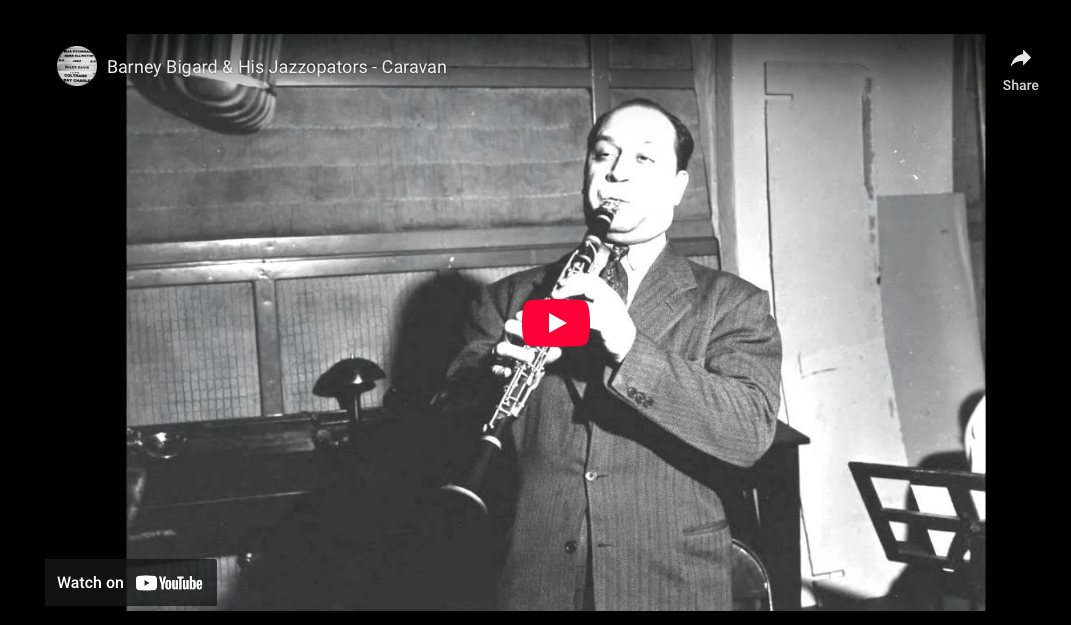
“Caravan”—Barney Bigard & His Jazzopators (1936)
While in Hollywood in December 1936, Irving Mills, after being Duke Ellington’s manager for a decade, decided it was time to make recordings with smaller groups from the Ellington band. On the 16th, the first group was led by cornet player Rex Stewart, and three days later clarinetist Barney Bigard was the second to lead an ensemble for Variety, one of Mills’ own two record labels -- the entire Ellington band was released on his Master records label.
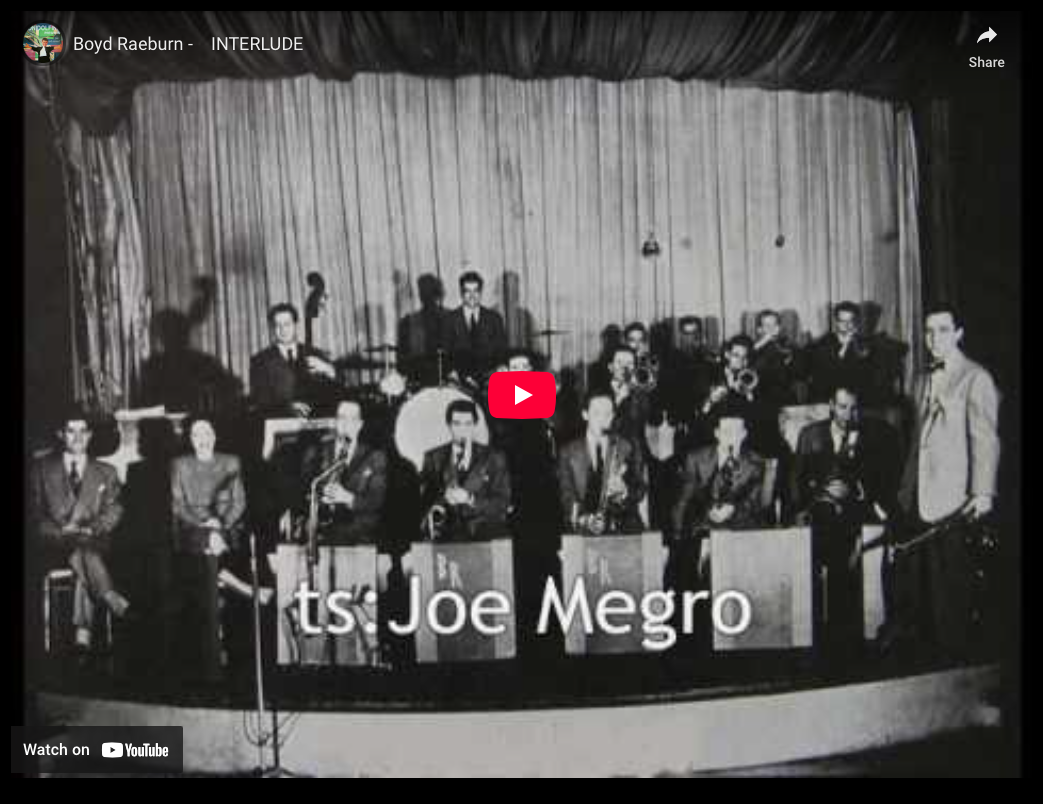
Boyd Raeburn & His Orchestra—”Interlude” (“A Night In Tunesia”) (1945)
“Interlude” was composed in 1941-42 by Dizzy Gillespie during his engagement with Benny Carter at Kelly's Stables in New York. During a break in the filming of a soundee, Gillespie sat down at the piano to improvise some chord changes. “Actually, they were thirteenth chords,” Gillespie recalled in his autobiography To Be, Or Not … To Bop. “A-thirteenth resolving to D minor. I looked at the notes of the chords as I played the progression and noticed that they formed a melody. All I had to do was write a bridge, put some rhythm to it, and it was over.” Gillespie called his new tune “Interlude.” Later it became generally known as “Night In Tunisia.”
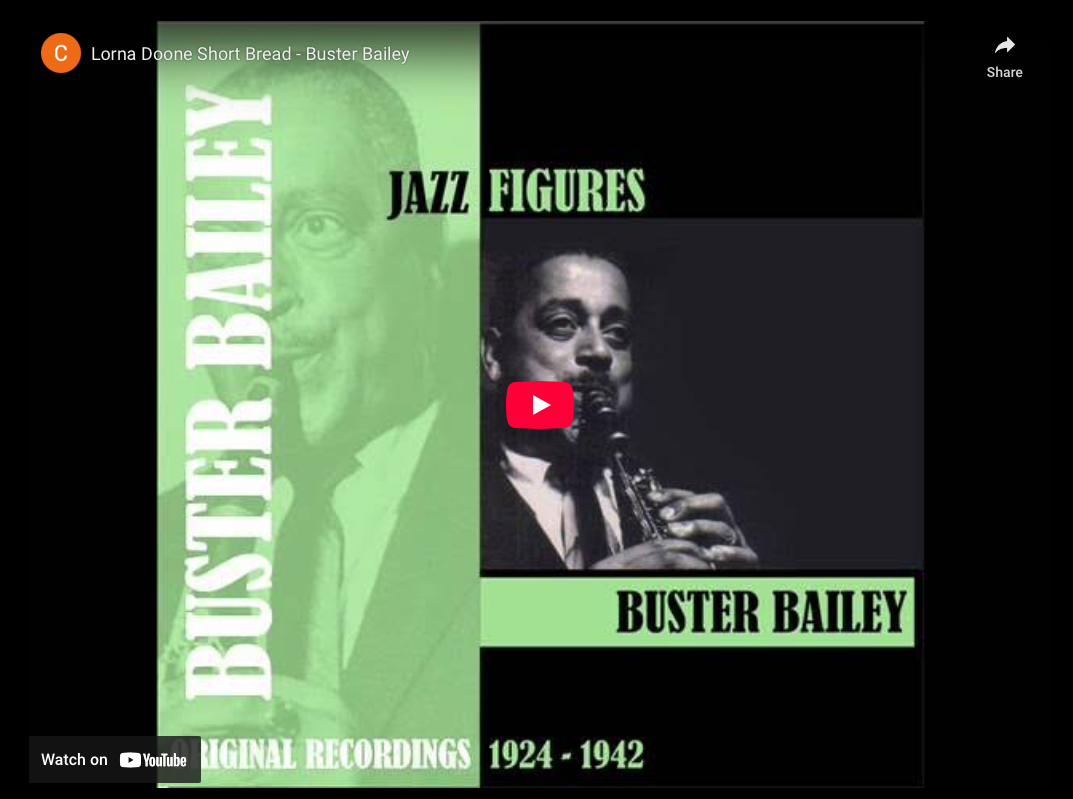
Buster Bailey—Lorna Doone Short Bread” (1938)
William C. “Buster” Bailey (1902-1967) was born in Memphis, Tennessee, and throughout his life has brought his clarinet to many swing club gatherings. He played in such outstanding bands as those of W.C. Handy, King Oliver and Fletcher Henderson and he was part of the famous John Kirby sextet and the Louis Armstrong All Stars. Bailey also led several studio groups and worked in smaller groups with musicians from the Kirby outfit. Such as with the Spencer Trio in Bailey’s own composition “Lorna Doone Short Bread.”
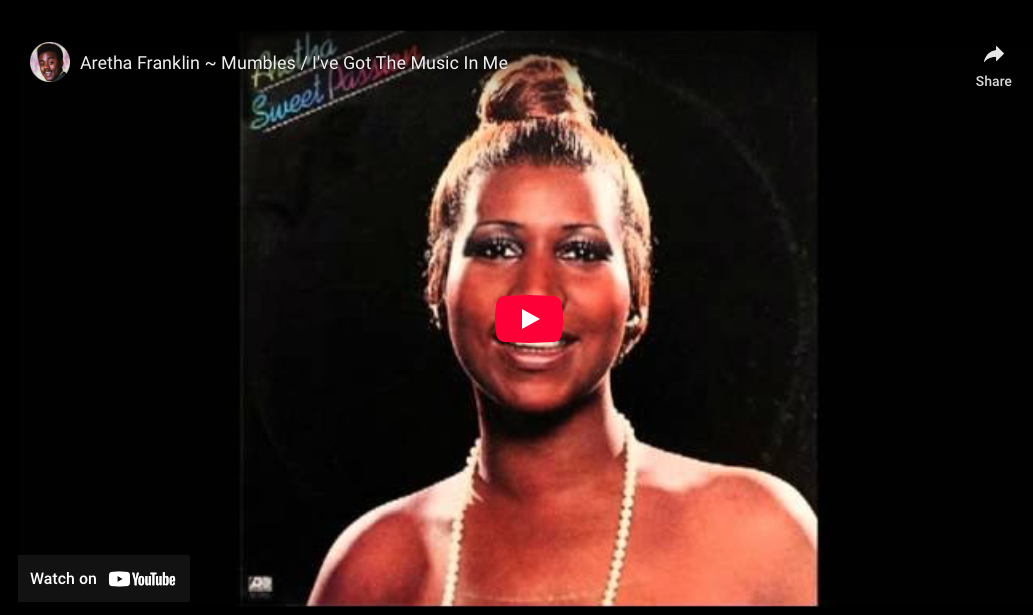
A Tribute to Aretha Franklin (1942-2018)
Aretha Franklin (1942-2018) was perhaps the most lavishly, talented popular singer of our time and will forever remain a true legend and musical icon.
Perhaps few people are aware that in her long career Aretha, whose work has never been less than superb, also recorded some jazzy vocals. Such as her voice-as-a-musical-instrument-thing in the scat choruses of “Mumbles/I've Got The Music In Me.”
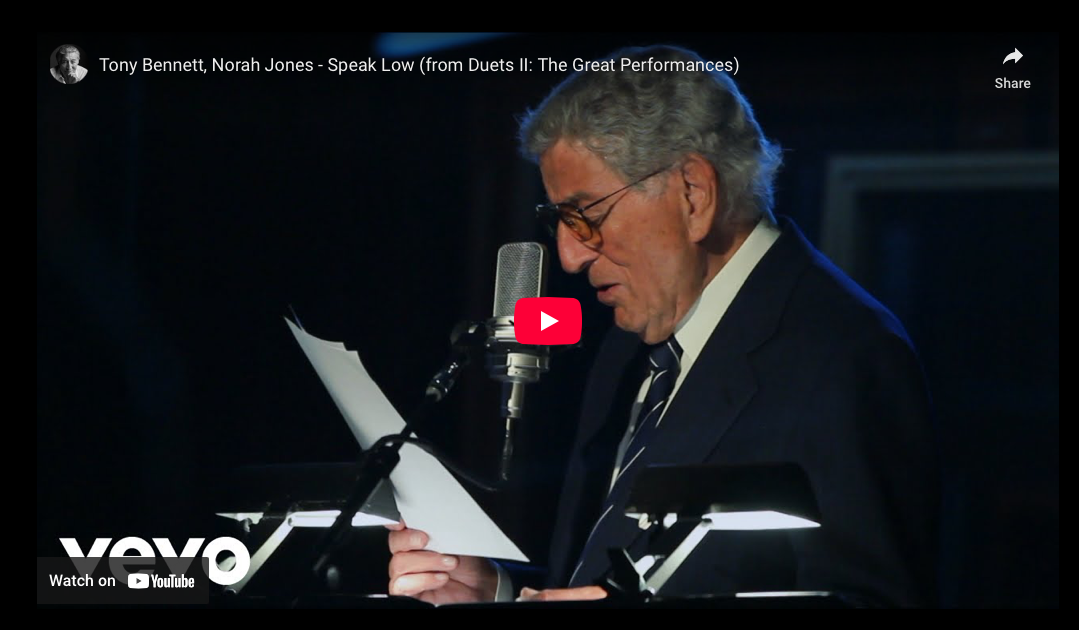
“Speak Low”—Tony Bennett & Norah Jones, A Tribute to Piet Stokkermans (1931-2018)
Earlier this month, on August 6th, one of the first Dutch members of our Classic Jazz Lovers group, bass player Piet Stokkermans, passed away, and our thoughts go out to his wife Ria and family.
Piet Stokkermans was born in 1931 and the teenage years of this jazz lover were hampered by the Second World War. As soon as that ended Piet took up guitar lessons. In those post war years, there were so many guitar players around that Piet -- wanting gigs where he could play and earn some money -- quickly switched to the double bass. First he played in Hawaiian bands and then Piet moved on to main stream jazz and Dixieland, the raucous yet sweet, stirring yet sentimental, bumpy music that gave the world the only rhythm recognized as strictly American.

“My Honey’s Lovin’ Arms”—The Original Memphis Five
Filippo Napoli (1901-1990), better known as Phil Napoleon, was an influence on both Bix Beiderbecke en Red Nichols.
In 1917, together with pianist Frank Signorelli (1901-1975), Napoleon formed a group called the Original Memphis Five.
In April 1922, they made their first record: “Gypsy Blues” and “My Honey’s Lovin’ Arms.” That first year the Original Memphis Five recorded more than a hundred titles.
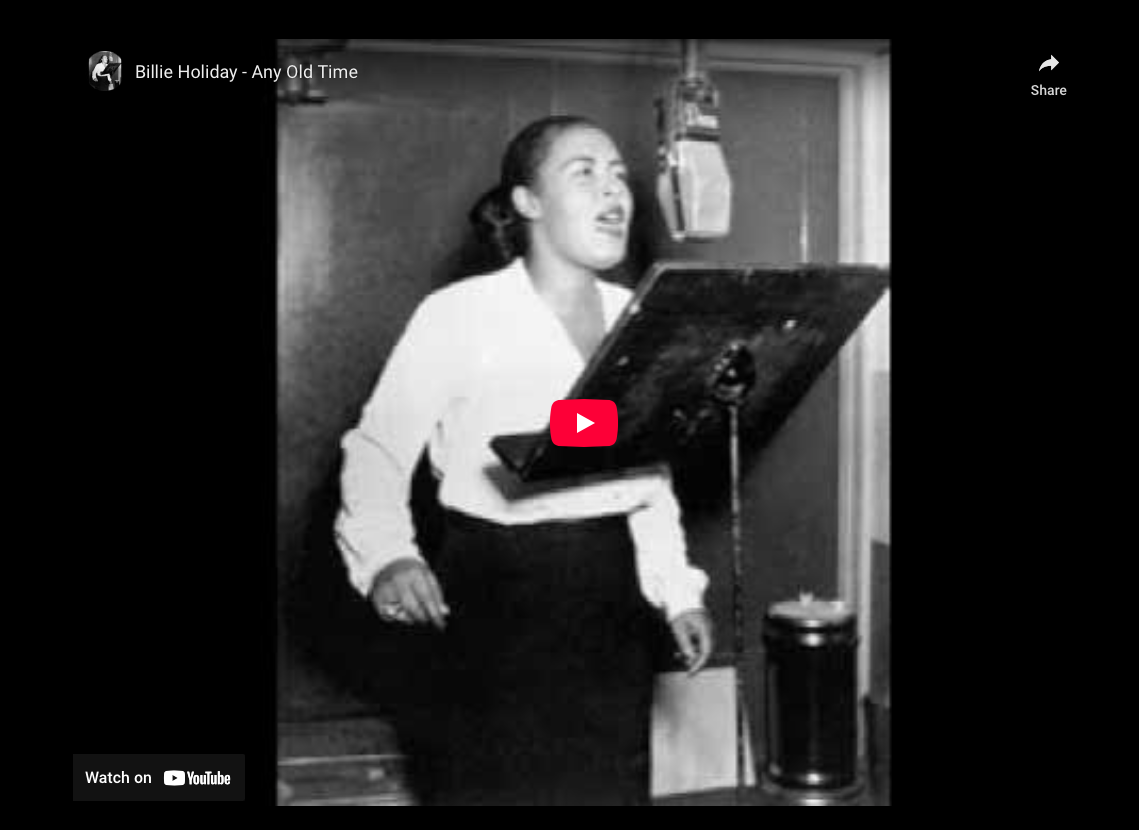
Billie Holiday with Artie Shaw & Orchestra—”Any Old Time”
When Artie Shaw waxed Cole Porter’s “Begin The Beguine” for RCA Victor’s Bluebird label in New York City, on July 24, 1938, the coupling on the Shaw record was “Any Old Time” for which Shaw wrote both the music and the words. It was sung by Billie Holiday, the second black female singer to be featured in an all white orchestra.
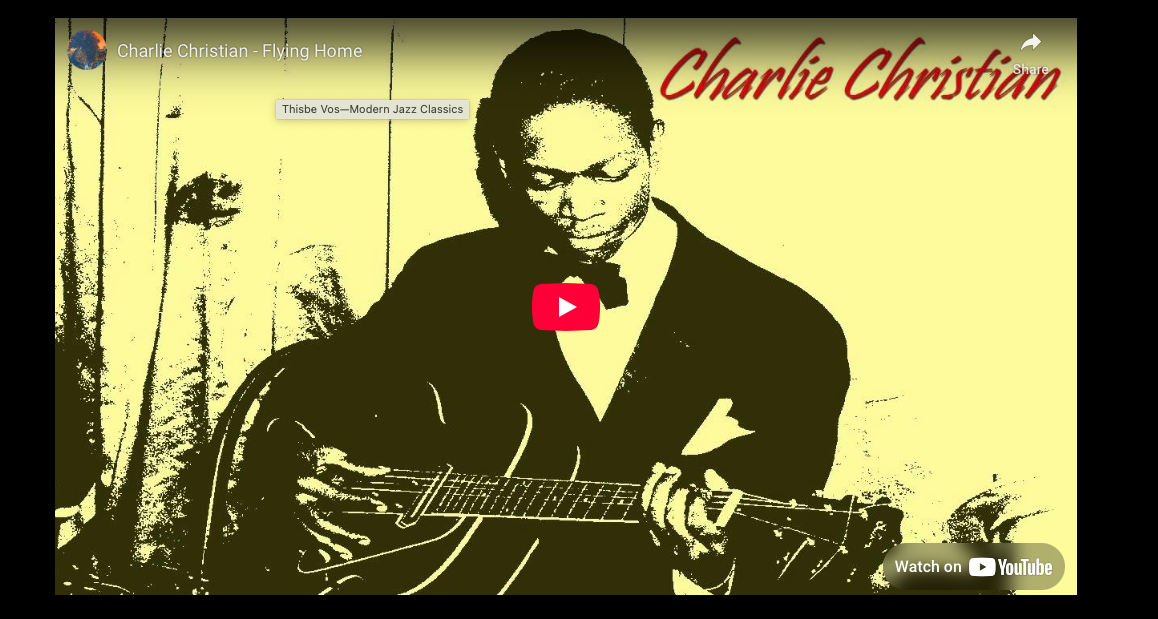
“Flying Home”—Charlie Christian with the Benny Goodman Sextet
In the mid 1930s Benny Goodman popularized the “band within a band” idea by adding Lionel Hampton and Teddy Wilson to his entourage, forming a quartet with himself and Gene Krupa. After Krupa and Wilson departed to lead their own outfits, the quartet -- or sometimes trio, or quintet -- had seen many personnel changes until it emerged as a sextet in 1939. Any doubts one might have had concerning the freedom of action afforded in the Benny Goodman Sextet in comparison to similar groups, may rest assured that the new outfit did not suffer from the size. The first recorded evidence: “Flying Home.”

“Too Darn Hot”—Stacey Kent
With tropical temperatures outside, no one in his right mind is going to sit down behind his laptop and write a Sunday Classics post. It’s just “Too Darn Hot.”
American vocalist Stacey Kent singing Cole Porter’s classic song from his 1948 musical “Kiss Me Kate.”
Count Basie—”Topsy”
William James Basie (1904-1984) hit the bigtime with Benny Moton’s band in Kansas City, and took charge when 40-year-old Moten died in 1935. Ever since, Count Basie has flavored his music consistently with one Moten ingredient -- a dancing beat -- and the added spice was Basie’s own driving swing.
Johnny Hodges—”In A Mellow Tone”
After some friction within the Ellington band during its late 1950 tour through Europe, altoist Johnny Hodges, slide trombonist Lawrence Brown and drummer William “Sonny” Greer handed in their notices in early 1951. Together with other former Ellingtonians they formed a small group around Hodges. They soon started recording, including many of the Duke’s tunes, like his 1939 composition “In A Mellow Tone,” based on the chords of Art Hickman‘s “Rose Room.”
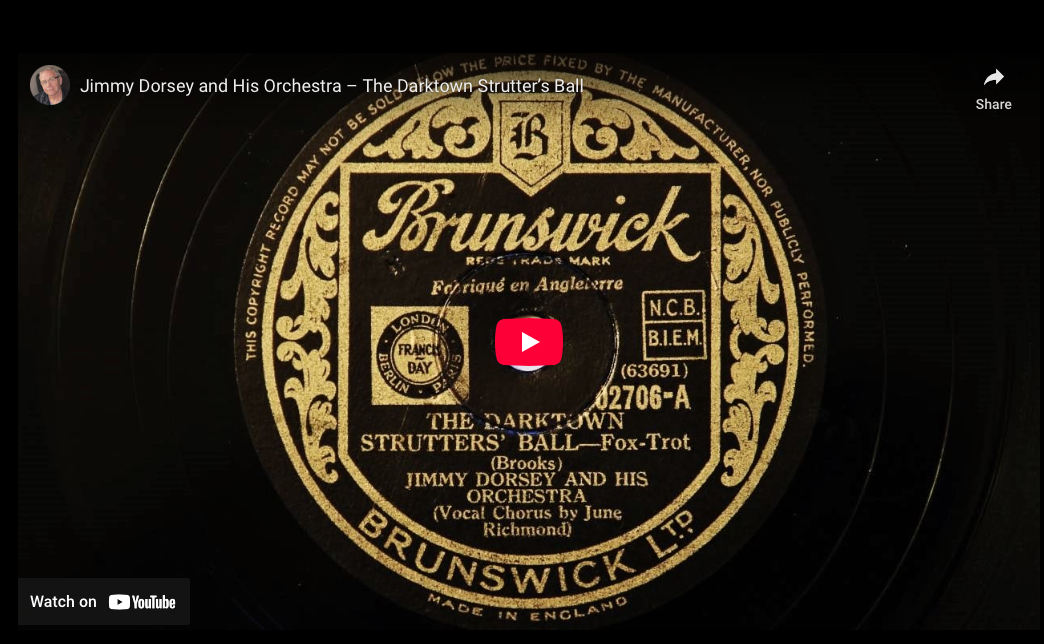
Jimmy Dorsey & His Orchestra with June Richmond—”The Darktown Strutters’ Ball”
In the 1930s, June Richmond became the first African-American songstress to join an all white band when she was asked by reedman/bandleader Jimmy Dorsey to join his Orchestra. One of her feature numbers with this band was Shelton Brooks’ 1917 composition “The Darktown Strutters’ Ball,” recorded for Brunswick in New York on April 29, 1938.
June Christy—”Fine Fine Deal”
In the spring of 1938, Bill Oetzel’s Society Dance Band, playing in Decatur, Illinois, found themselves without a girl vocalist. Among the eager aspirants requesting auditions was a thirteen-year-old hopeful, Shirley Luster, who also had childhood dreams of movie stardom. The boys in the band exchanged smiles and picked up their instruments to accompany this 5-foot-2 “baby of song.” Thirty-two bars later, Shirley was hired, and the fresh and sweet singer who was one day to become known to us as June Christy was on her way.

Nancy Wilson—”On Green Dolphin Street”
From time to time a song composed for a play or film becomes a jazz classic. One of those songs was “On Green Dolphin Street,” originally written for the MGM movie based on Elizabeth Goudge's 1944 novel "Green Dolphin Street."
The melody was written by Bronislaw Kaper (1902-1983), who emigrated from Poland to the U.S.A. and became a film composer. The lyricist was Pennsylvania-born Ned Washington (1901-1976).
This recording is by The George Shearing Quintet with Nancy Wilson, from their 1961 album “The Swingin’s Mutual.”

“My Mother’s Eyes”—Saxophonist Sonny Stitt
For this Mother's Day I have selected the tune "My Mother's Eyes." It was written 90 years ago by two Tin Pan Alley songwriters: composer Abel Baer (1893-1976) from Baltimore, Maryland, and lyricist Louis Wolfe Gilbert (1886-1970) who was born in the Russian Empire town of Odessa.
This is Sonny Stitt's soulful rendering of the tune.
Edward "Sonny" Stitt (1924-1982) was a saxophonist whose self developed style bore an uncanny resemblance to that of Charlie Parker.
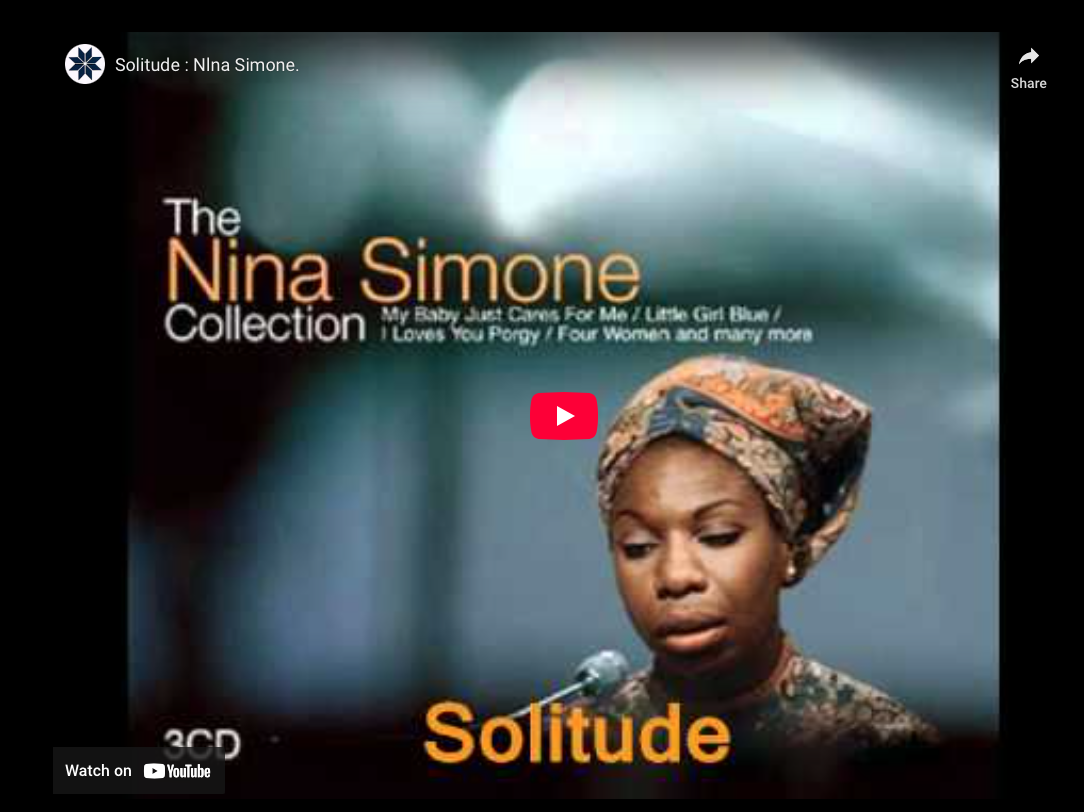
Nina Simone—”Solitude”
Nina Simone--vocal/piano/arrangements, accompanied by The Malcom Dodds Singers and an orchestra conducted by Ralph Burns.
“Nina Simone sing Ellington!” was released in August 1962. It was Nina’s idea to do the Ellington album. She had taken a flock of Duke Ellington tunes, some familiar and some not-so-familiar, and handed them interesting and intriguing renditions in her own special style.

Duke Ellington—”I Let A Song Out Of My Heart”
Edward Kennedy “Duke” Ellington (1899-1974) is not only one of the greatest names in jazz but one of the most important icons of contemporary American music as well. The art student who had turned musician wrote this fine melody in the late 1930s: “I Let A Song Go Out Of My Heart.”